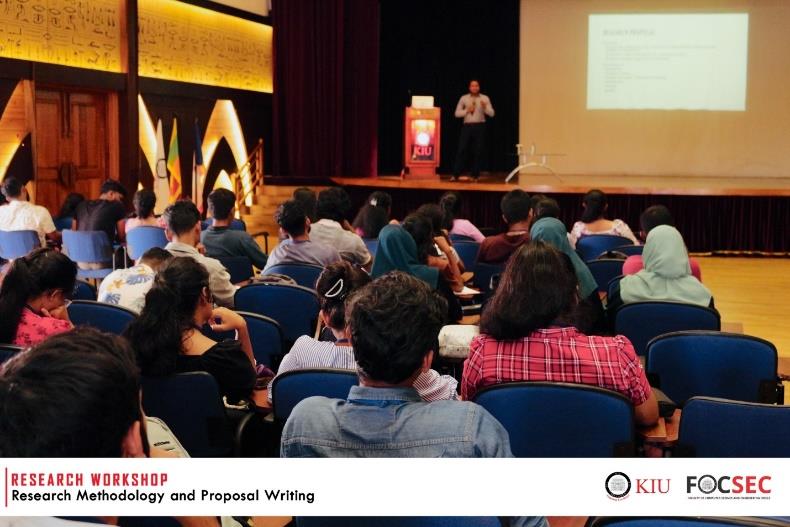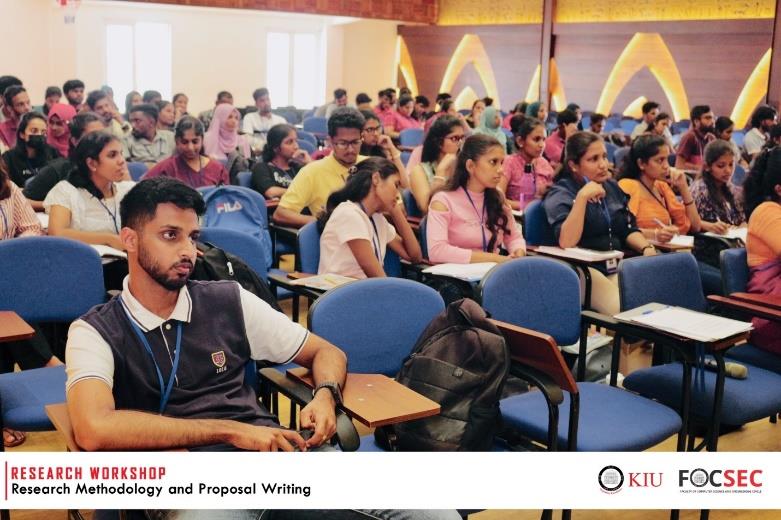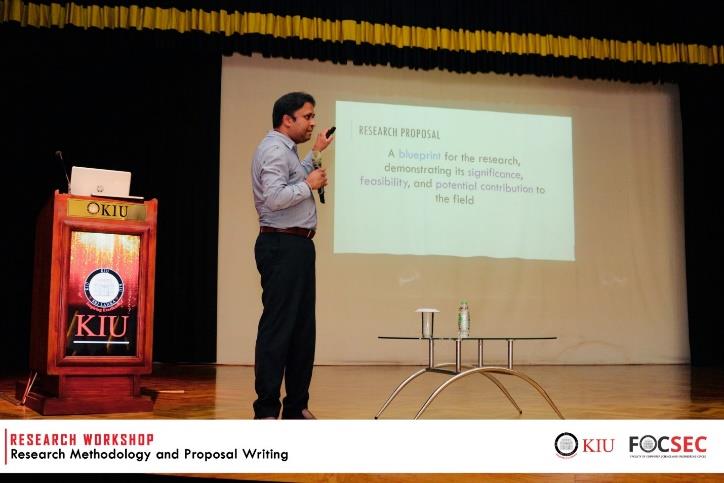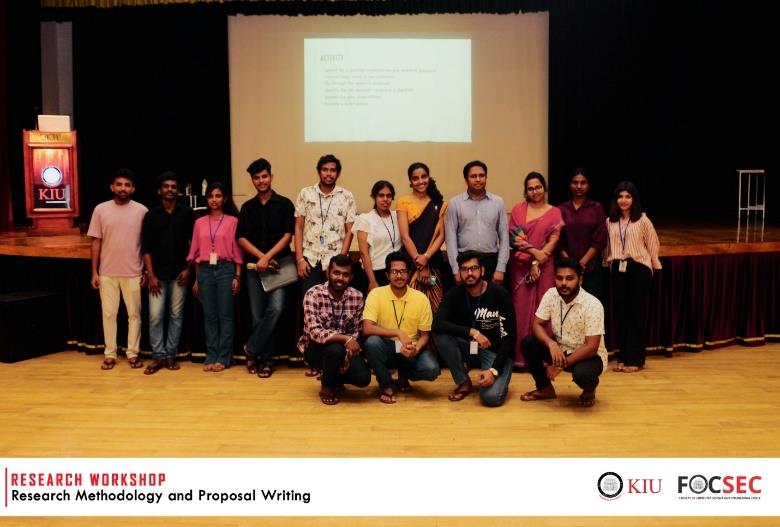
Topic: Research Methodology & Proposal Writing Workshop
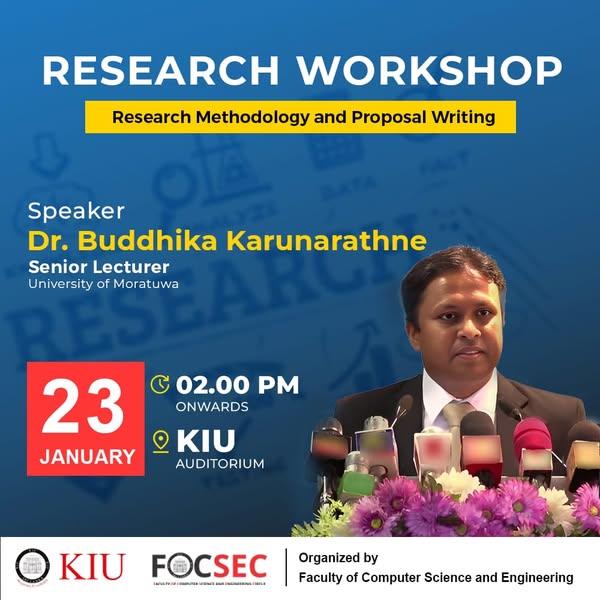
Date: 23rd January 2025
Venue: at the KIU Auditorium
Resource Person: Dr. Buddhika Karunarathne, Senior Lecturer at the University of Moratuwa
Participants: All students
Approved Flyer:
Objectives: The workshop provided students with key insights into effective research methods, proposal writing, and enhancing their academic growth. It aimed to equip students with the necessary skills to excel in their future research projects and academic careers.
About the Workshop
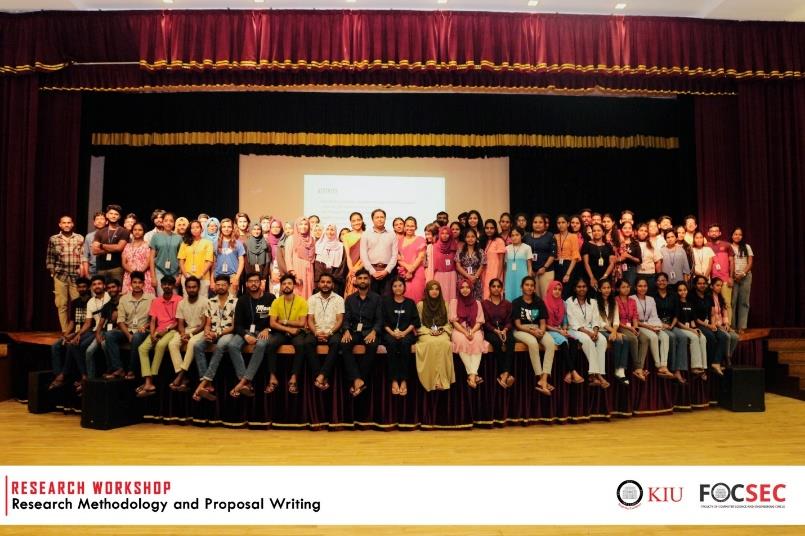
The Faculty of Computer Science and Engineering at KIU University held its 3rd Research Workshop on 23rd January 2025 — the third in a rapid series of research-focused sessions organised for students in January and March 2025. Where the first workshop introduced students to research fundamentals and the second helped them discover project ideas, this third session tackled what comes next: how to turn an idea into a structured, credible research proposal.
Held at the KIU Auditorium from 2:00 PM onwards and organised jointly by the Faculty of Computer Science and Engineering and FOCSEC — the faculty’s student society — the session brought all students together for a focused, practical session on research methodology and academic proposal writing. These are skills that students need not just for undergraduate dissertations, but for any future pursuit of postgraduate study, research funding, or publication.
Resource Person
The workshop was led by Dr. Buddhika Karunarathne, a Senior Lecturer in the Department of Computer Science and Engineering at the University of Moratuwa, holding a PhD from the Hong Kong University of Science and Technology (HKUST) and a BSc Eng. (Hons) from the University of Moratuwa. The Department of Computer Science and Engineering at UoM is home to research spanning a wide range of areas including localisation, e-learning, Big Data, text mining, image processing, robotics, networking, knowledge representation, and computer and network security.
Dr. Karunarathne’s background in both international research and undergraduate-level supervision made him an ideal guide for this session. His experience navigating academic research structures — from formulating research questions and reviewing literature through to writing structured proposals and preparing for review — gave students access to firsthand insight into what rigorous research practice looks like in practice.
What Students Learned
The session covered the full arc of the research proposal process. Students were introduced to the core components of a research methodology — understanding the difference between qualitative and quantitative approaches, choosing appropriate data collection methods, and structuring a research design that aligns with the question being investigated.
Proposal writing was addressed both as an academic skill and as a practical communication challenge. Students learned how to write a problem statement that is clear and well-scoped, how to frame a literature review that situates their work within existing knowledge, and how to articulate the significance of their proposed research in terms that are convincing to academic reviewers.
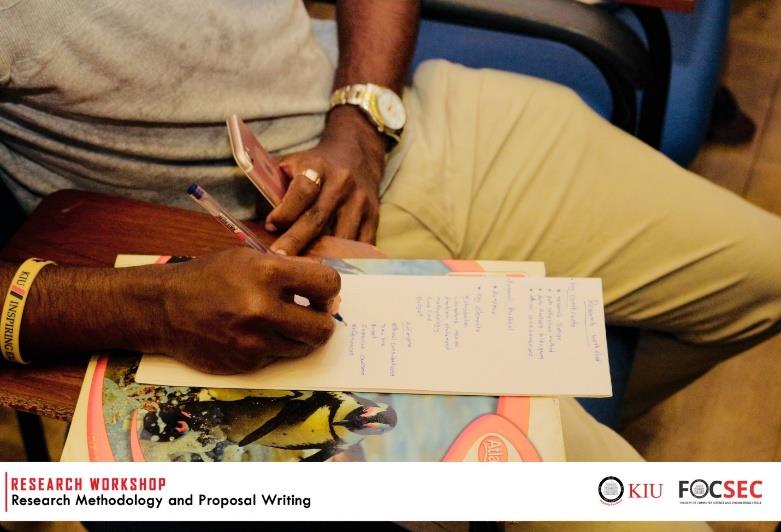
Critical thinking was woven throughout — students were encouraged to challenge their own assumptions, identify weaknesses in proposed methodologies, and anticipate the kinds of questions a reviewer or supervisor might ask. The session also gave students hands-on practice in presenting proposals and receiving structured feedback from their peers, reinforcing both communication skills and the ability to receive and respond to critique constructively.
The Bigger Picture
Three research workshops in the space of two months — covering research fundamentals, idea discovery, and proposal writing in sequence — reflect the Faculty of Computer Science and Engineering’s deliberate and structured approach to building research capacity among its students. Rather than treating research as an isolated final-year exercise, the faculty is embedding it as a progressive, cumulative skill that students develop from early in their studies. This foundation will serve them well whether they go on to postgraduate study, pursue careers in research and development, or simply become professionals who can think, evaluate evidence, and solve problems systematically.
Sample Evidence: (Photos/Videos/Links)