Topic: How to Find Project Ideas in Engineering & Computer Science
Date: 19.01.2025
Venue: KIU Auditorium
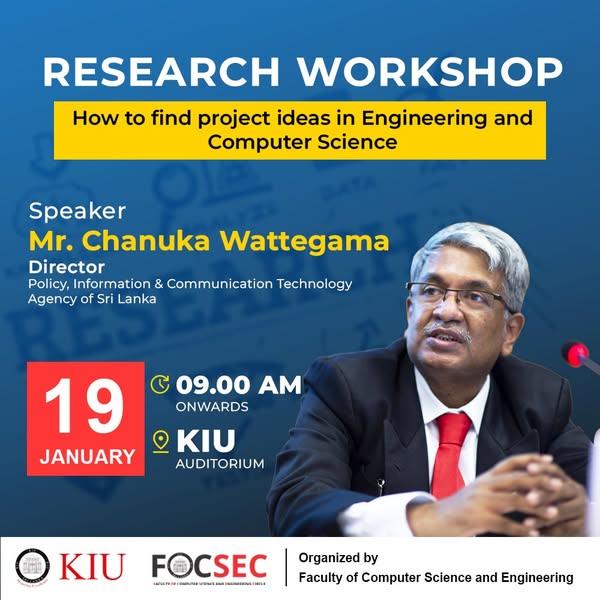
Resource Person: Mr. Chanuka Wattegama, Director – Policy at ICTA Sri Lanka
Participants: All students
Approved Flyer:
Objectives: This workshop was to guide students in identifying and developing impactful research ideas within the fields of Engineering and Computer Science. By focusing on innovative problem-solving, collaborative brainstorming, and effective research methodologies, the workshop aimed to enhance students’ critical thinking, communication, and teamwork skills. It also provided practical insights into presenting and defending project ideas, preparing them for future academic and professional success.
About the Workshop
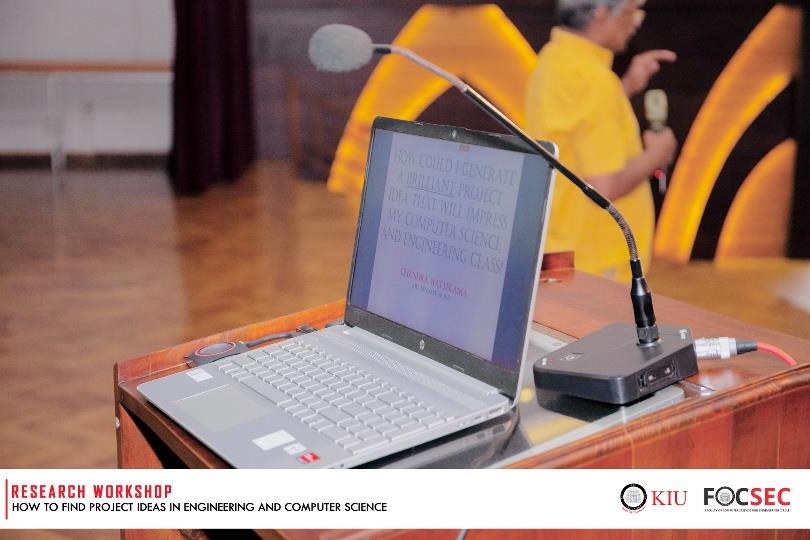
The Faculty of Computer Science and Engineering at KIU University held its 2nd Research Workshop on 19th January 2025, building on the momentum of the inaugural research workshop held in March of the same year. Where the first session introduced students to the fundamentals of research in computing, this second workshop turned the focus toward something more immediately practical: how to find the right project idea in the first place.
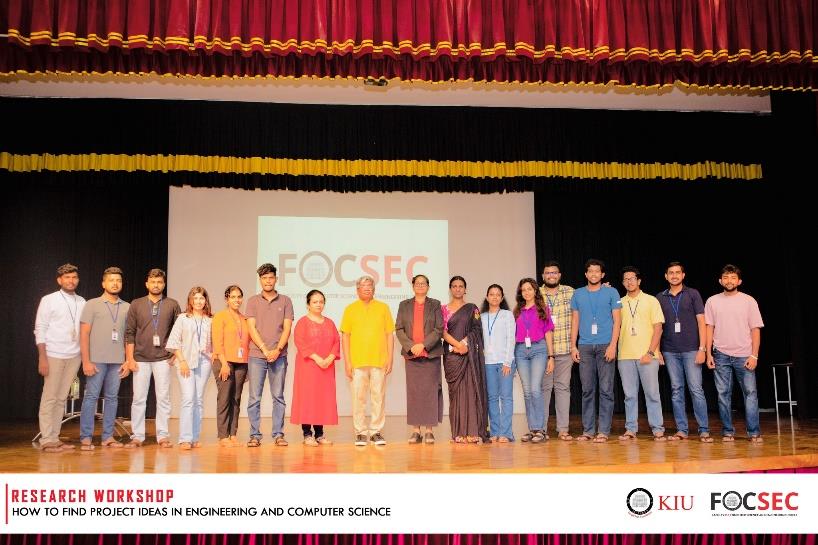
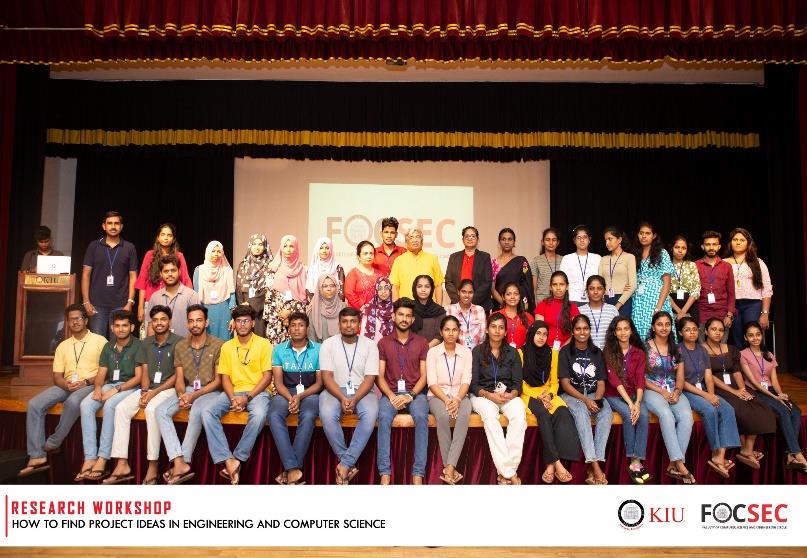
Held at the KIU Auditorium and open to all students in the faculty, the session addressed one of the most common challenges that undergraduate engineering and computer science students face — moving from a general interest in a topic to a specific, workable, and original research or project concept. The workshop was organised by the Faculty of Computer Science and Engineering in collaboration with FOCSEC, the faculty’s student society.
Resource Person
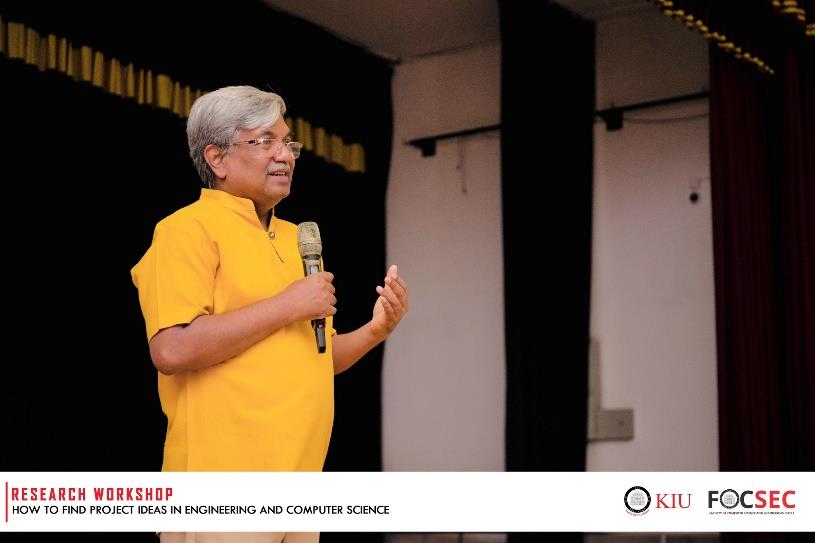
The workshop was led by Mr. Chanuka Wattegama, Director of Policy at the Information and Communication Technology Agency (ICTA) of Sri Lanka, bringing extensive experience in ICT policy and strategic initiatives — with a background spanning consulting, education, and the development sector.
Mr. Wattegama has worked as an independent policy researcher and consultant for the World Bank, UNESCAP, and UNDP, with expertise spanning telecom policy and regulations, ICT for Development, Development Economics, and Disaster Risk Reduction. He holds a Master of Business Administration (MBA) from the University of Colombo and currently heads ICTA’s Policy Division, where he is responsible for devising digital policy for both the public and private sectors of Sri Lanka.
He is also a visiting lecturer at the University of Colombo and the Open University of Sri Lanka, where he teaches Information Policy and Disaster Communications respectively. His combination of deep policy experience, industry knowledge, and academic teaching made him an exceptionally well-suited resource person to guide computing students through the challenge of identifying meaningful, real-world-connected project ideas.
What Students Learned
The session tackled the project idea discovery process from multiple angles. Students were guided through how to scan the existing landscape of technology and society to identify genuine problems worth solving — rather than defaulting to ideas that have already been extensively researched or that lack practical significance.
Mr. Wattegama drew on Sri Lanka’s own digital transformation journey to illustrate how some of the most impactful computing projects have emerged from observing real gaps in public services, industry processes, and community needs. This grounding in real-world context gave students a practical framework for evaluating whether a project idea has genuine merit — not just as an academic exercise, but as something with the potential for meaningful application.
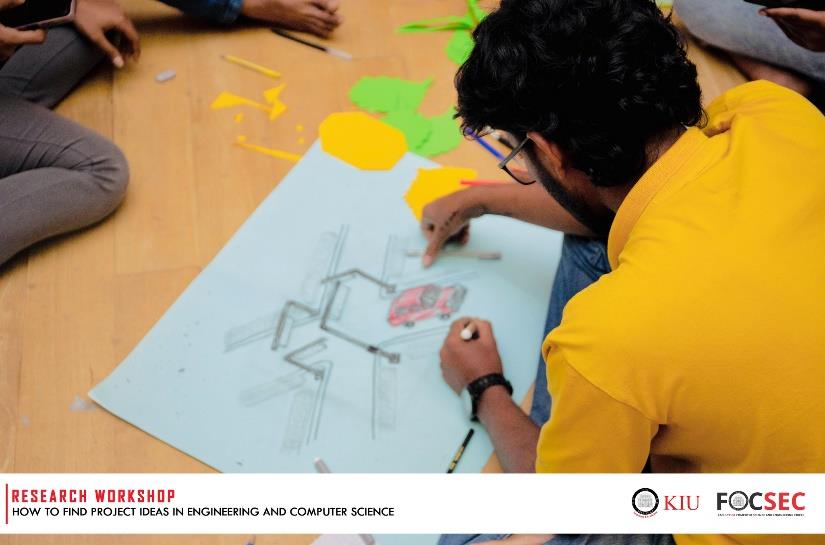
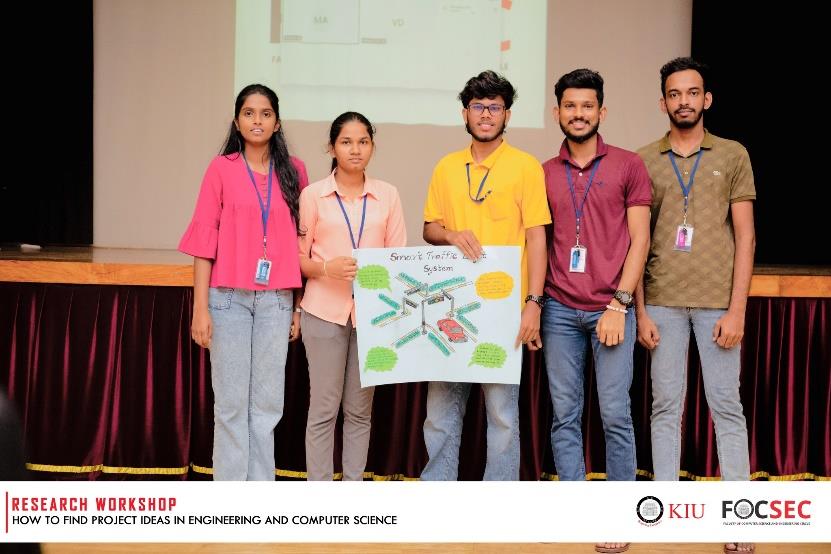
The workshop also covered collaborative brainstorming techniques, helping students work together to generate, challenge, and refine ideas. Students practised presenting emerging project concepts to their peers and responding to critical questions — developing both their communication skills and their ability to defend a project rationale clearly and confidently.
Building a Research-Active Faculty
This second workshop reinforces the Faculty of Computer Science and Engineering’s commitment to nurturing research thinking as a core student competency — not something reserved for final-year dissertations, but a skill developed progressively from the first year of study. By bringing in practitioners of Mr. Wattegama’s standing, the faculty is also opening a channel between KIU students and Sri Lanka’s broader ICT ecosystem, giving students early exposure to the kind of policy, industry, and community challenges that their work as engineers and computer scientists can help address.
Sample Evidence: (Photos/Videos/Links)